

When I first entered the molded pulp packaging industry, I thought the biggest challenge was understanding how to turn fiber into functional packaging.
How to design the structure.
How to control the forming process.
How to achieve better appearance and performance.
But as I became more involved in real projects, I discovered another important question:
A packaging solution is not only about how it is made. It is also about how it performs throughout its entire lifecycle.
Today, customers are asking more questions than ever before:
Is this packaging recyclable?
Is it biodegradable?
Does it contain harmful substances?
Does it meet future regulatory requirements?
Can it support a brand’s sustainability goals?
These questions are changing the way we look at molded pulp packaging.
Recently, we completed a new round of sustainability-related testing and certification evaluation for our molded pulp products, including areas such as EU PPWR compliance, fluorine-free performance, biodegradability and recyclability.
For me, these reports are not just documents.
They represent a deeper understanding of where fiber packaging is moving.
Sustainability Is Becoming a Requirement, Not Just a Trend
A few years ago, sustainability was often discussed as a brand advantage.
Today, it is becoming a fundamental requirement.
Especially in markets such as Europe, packaging regulations are becoming increasingly focused on:
- reducing unnecessary packaging;
- improving recyclability;
- increasing the use of renewable materials;
- reducing harmful substances;
- supporting a circular economy.
The introduction of regulations such as the European Union Packaging and Packaging Waste Regulation (PPWR) shows that the future of packaging will not only focus on appearance and cost.
Compliance and environmental performance will become part of the product design process.
This means packaging manufacturers need to think beyond:
“Can we make this product?”
The question is becoming:
“Can we make this product responsibly and prove its performance?”
Understanding PPWR: Packaging Needs to Prepare for the Future
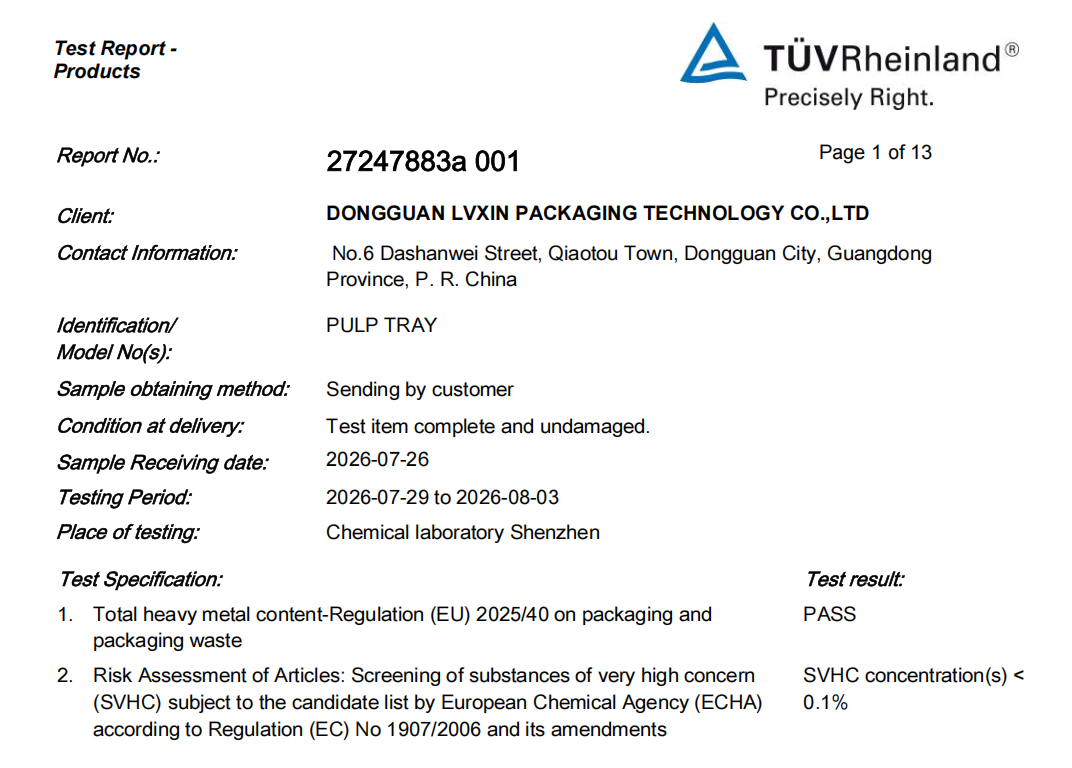
One of the key topics we have been following is the development of EU PPWR requirements.
From my perspective, the biggest change is that sustainability is moving from a marketing statement toward measurable requirements.
In the future, packaging solutions may need to demonstrate stronger performance in areas such as:
- recyclability;
- material efficiency;
- reduction of unnecessary materials;
- responsible packaging design.
For molded pulp packaging, this creates both opportunities and challenges.
Fiber-based packaging naturally has advantages:
It comes from renewable fiber resources.
It can reduce dependence on fossil-based plastics.
It has a natural appearance and material story.
But at the same time, good sustainability performance requires more than simply using a natural material.
The entire system matters:
Raw materials.
Manufacturing process.
Additives.
Surface treatments.
End-of-life pathway.
This is why testing and verification are becoming increasingly important.
Why Fluorine-Free Matters
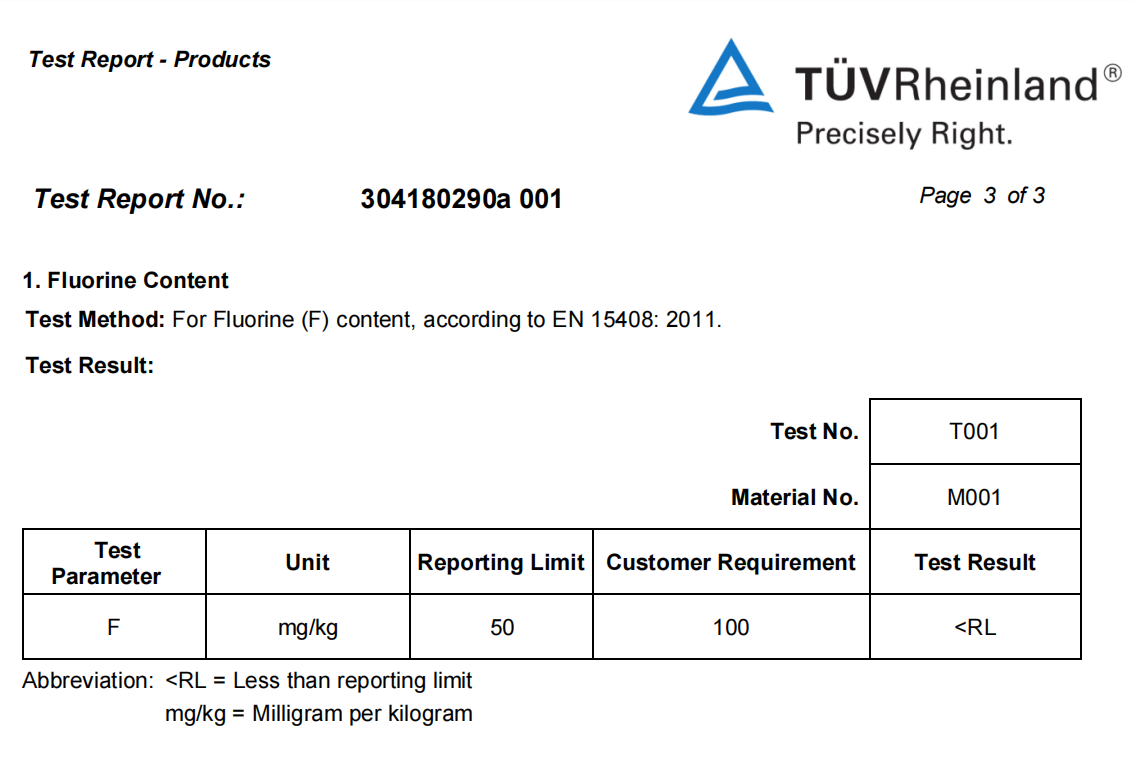
Another important topic from our latest testing was fluorine-free performance.
For many years, certain fluorinated substances were used in different industries because of their water, oil and grease resistance properties.
However, concerns around PFAS (per- and polyfluoroalkyl substances) have increased due to their persistence in the environment.
For packaging applications, especially those related to food, cosmetics and consumer products, customers are paying more attention to material safety.
A fluorine-free report helps provide additional confidence that the packaging solution avoids intentionally added fluorinated substances.
But this also creates new technical challenges.
Because removing certain chemical treatments means manufacturers need to rethink:
How can we maintain product performance?
How can we protect the product?
How can we balance functionality and sustainability?
This is where material science and manufacturing experience become important.
Biodegradable Does Not Mean Everything Happens Automatically
One thing I have learned during this journey is that sustainability terms need to be understood carefully.
Many people hear “biodegradable” and imagine that a product will simply disappear naturally under any conditions.
The reality is more complicated.
Biodegradation depends on many factors:
- material composition;
- environment;
- temperature;
- moisture;
- microorganisms;
- testing standards.
For molded pulp packaging, biodegradability is closely connected with the natural characteristics of fiber materials.
However, responsible claims should always be supported by proper testing rather than assumptions.
A sustainability statement is much stronger when it is backed by evidence.
Recyclability: Designing Packaging for the Circular Economy
Another important part of our evaluation was recyclability.
Traditionally, packaging design often focused on one question:
“How can we protect the product?”
Today, we need to add another question:
“What happens after the product has been used?”
A good packaging solution should consider the complete journey.
From raw material selection.
To manufacturing.
To consumer use.
To end-of-life management.
For molded pulp, recyclability is one of the important advantages of fiber-based packaging.
But achieving better recycling performance also requires attention to:
- material purity;
- coatings;
- adhesives;
- additional components.
A truly sustainable package is not created by one single decision.
It is created through many small decisions made throughout the design process.
What These Reports Mean to Me
Before working with molded pulp, I mainly viewed packaging materials from a commercial perspective.
Material cost.
Production efficiency.
Delivery time.
Customer requirements.
But sustainability testing has changed my perspective.
A packaging product is not only a physical object.
It carries information about:
- Where the material comes from.
- How it was manufactured.
- What substances were used.
- How it can return to the environment or recycling system.
These reports help transform sustainability from an idea into something measurable.
And that is an important step for the entire molded pulp industry.
Sustainability Is Also a Design Challenge
One thing I find increasingly interesting is that sustainability and design are not separate topics.
They influence each other.
For example:
A structure designed with fewer materials may reduce environmental impact.
A simpler material combination may improve recyclability.
A better forming design may reduce production waste.
A more suitable fiber selection may improve overall performance.
This means future packaging designers need to think differently.
The best design is not only the one that looks attractive.
It is the one that balances:
Function.
Appearance.
Manufacturability.
Cost.
And environmental responsibility.
My Current Understanding
I am still learning.
These testing reports are not the end of the journey.
They are another step in understanding how molded pulp packaging can develop in a more sustainable direction.
The more I work with fiber packaging, the more I realize:
Sustainability is not achieved by one certificate.
It is created through continuous improvement.
Better materials.
Better processes.
Better design decisions.
Better communication between customers, designers and manufacturers.
For me, the value of these reports is not only that they demonstrate compliance.
They remind us that packaging is changing.
The future of packaging will not only ask:
“Can you manufacture this?”
It will ask:
“Can you manufacture this responsibly, consistently and transparently?”
That is the direction I believe molded pulp is moving toward.